
Understanding Glass Tile and Its Unique Properties
Glass tiles offer a sleek and contemporary look that enhances the beauty of any space. Their reflective surfaces and vibrant colours make them a popular choice for kitchens, bathrooms, and feature walls. However, glass tiles are different from ceramic or stone tiles in terms of composition, which means they require special considerations when it comes to installation. One of the most crucial factors is the choice of mortar, as it directly impacts the adhesion, durability, and aesthetic appeal of the tiles.
Why Standard Mortar May Not Be Suitable
Traditional mortar mixes used for ceramic or porcelain tiles are often not the best option for glass tiles. Standard mortar can struggle to bond effectively with the non-porous surface of glass, which increases the risk of tiles detaching over time. Additionally, glass tiles tend to be translucent or reflective, which means that the mortar colour and consistency can affect their final appearance. If the wrong mortar is used, it can create shadows or an uneven finish that diminishes the overall look of the installation.
The Importance of a High-Quality Thin-Set Mortar
The best choice for installing glass tiles is a high-quality, polymer-modified thin-set mortar. This type of mortar is specifically designed to provide superior adhesion and flexibility, both of which are essential when working with glass. Since glass does not absorb moisture like ceramic or stone, the mortar must have strong bonding properties to ensure a secure hold. The addition of polymers improves adhesion and helps accommodate minor movements within the tile surface, reducing the risk of cracking or shifting over time.
Choosing the Right Colour for Glass Tile Mortar
Because glass tiles are often clear, translucent, or light in colour, the mortar shade can influence the final aesthetic. White mortar is the most recommended option for glass tile installations, as it prevents discolouration and enhances the brightness of the tiles. Dark or grey mortars may be visible through the tiles, leading to an unintended colour shift that alters the design. Selecting a high-quality white thin-set mortar ensures that the finished result remains true to the intended look.
The Role of Non-Sanded Mortar in Glass Tile Installation
Another key consideration is whether to use sanded or non-sanded mortar. Non-sanded mortar is the preferred choice for glass tile installations because it provides a smoother application that prevents scratching. Since glass tiles have a delicate surface, using a mortar with abrasive sand particles can lead to fine scratches or surface imperfections. A non-sanded, polymer-modified thin-set mortar allows for clean, smooth adhesion while maintaining the integrity of the tiles.
Working with Large or Mosaic Glass Tiles
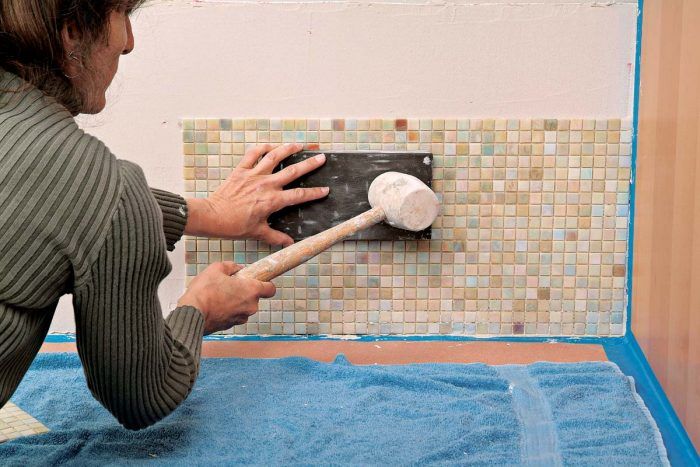
The size of the glass tile can also influence the choice of mortar. For larger glass tiles, a high-performance, latex-modified thin-set mortar provides the necessary bonding strength to hold them in place securely. In contrast, smaller mosaic glass tiles may benefit from a lightweight thin-set that spreads easily and supports even application. Regardless of tile size, ensuring full coverage of the mortar behind each tile is essential to prevent weak spots and potential breakage.
Application Techniques for Best Results
Using the right trowel size and application method is just as important as selecting the correct mortar. A notched trowel with small ridges helps distribute the mortar evenly while avoiding excessive buildup that could show through the glass. Additionally, back-buttering each tile—a technique where mortar is applied directly to the tile back—enhances adhesion and eliminates air pockets that can create shadows. Ensuring proper curing time before grouting is also essential, as rushing the process may weaken the bond between the tile and mortar.
The Impact of Environmental Conditions
Temperature, humidity, and substrate conditions play a significant role in the success of a glass tile installation. The selected mortar should be rated for the specific environment where the tiles are being placed. For wet areas like showers and backsplashes, a waterproof, mould-resistant mortar can provide additional durability. Ensuring that the substrate is clean, dry, and properly prepared before applying mortar also contributes to a strong and long-lasting bond.
Ensuring a Professional Finish with the Right Mortar
Investing in the correct mortar for glass tiles is essential for both the longevity and aesthetics of the installation. A high-quality, polymer-modified, non-sanded thin-set mortar will ensure that the tiles remain securely in place while maintaining their original clarity and beauty. Whether installing mosaic glass tiles or large glass panels, taking the time to select the appropriate mortar and following best installation practices will result in a flawless and durable finish.
